
How to Read a COA
A Certificate of Analysis (COA) is one of the most important quality documents available when evaluating research materials. It provides documented evidence that a product has been tested and that its characteristics match the information provided on the label.
Yet, a lot of researchers get COAs and no one teaches them what to do with the data provided in COA. By knowing what to do with each part of a COA, you can make sure of the product identity, purity, and quality and test precision.
What Is a Certificate of Analysis (COA)?
A COA is an official lab report of the results from analytical testing on a given batch of material. The COA identifies critical information such as: product identity, level of purity, analytical tests used and which lab performed testing.
The best COA is written and supplied from a qualified testing laboratory – not a supplier. Third-party lab reports instill higher confidence because the lab is accountable for reporting testing results accurately and reliably.
The Six Essential Elements Every COA Should Include
Some crucial information is included in a well-drafted Certificate of Analysis. If information is absent, that might be a red flag for you to do your due diligence.
1. Product Name
Make sure that the COA shows the exact same product name as the item that you ordered. You will also need to confirm that the description and specification shown in the COA are consistent with your purchase.
2. Batch or Lot Number
One of the key components of a COA is the batch number. The batch/lot number on the certificate MUST match the number printed on the vial or container the product comes in.
A COA is only valid for the batch of product that was actually analyzed. So, a COA for a batch of product other than the batch you received is meaningless.
3. Purity Testing (HPLC)
If you need a high purity measurement, one of the most common techniques used to measure purity is HPLC (High-Performance Liquid Chromatography). It isolates the compound of interest from impurities and gives a percent measurement.
The higher the percent, the less impurities are detected. When analyzing the percent result from HPLC, make sure there is a corresponding chromatogram that comes with it.
4. Identity Confirmation (Mass Spectrometry)
So, just performing a purity test can’t confirm you have the right substance. You also want to confirm you have the right molecular weight. Mass Spectrometry (MS) is one way to do that, ensuring that what you ran in your experiment is actually what you think it is.
Essentially, HPLC is your test for composition. MS confirms that your compound actually is what it is. Both are very important, and each give different information!
5. Laboratory Information and Accreditation
A legitimate COA should include the name of the testing laboratory and the necessary accreditation information.
ISO 17025 is a quality standard for testing laboratories around the world, so this certification should provide confidence in their results. Investigators should be able to verify the lab’s accreditation independently.
6. Testing Date
The date of analysis will tell you when the material was analyzed. The age of a COA may be a factor depending on your specific material needs, especially when the material needs to be stored in specific conditions.
Older certificates may need to be verified depending on the storage, handling, and how you intend to use the material.
Why the Batch Number Verification Matters
Verifying the batch number is a super easy, but incredibly critical, step in your COA review process. What you might be surprised to find is that a lot of the issues researchers run into are the result of the fact that they review the COA itself, but don’t verify it corresponds with the material they received.
Manufacturing parameters for each production lot can change over time. Changes in how the material was synthesized, purified or even handled during manufacturing can impact a lot’s physical or chemical properties.
At the end of the day, a COA from lot number 1 doesn’t necessarily certify lot number 2. It only certifies the specific lot number it is associated with.
Understanding an HPLC Chromatogram
Your COA will also have an HPLC chromatogram. This is just a graph that illustrates the purity of your product. If you know the fundamentals of reading one, it will also help you interpret what the numbers on your COA mean.
The chromatogram typically contains:
- X-axis: Retention time, measured in minutes.
- Y-axis: Detector response, often shown as UV absorbance.
The biggest peak, one that accounts for most of the integrated area, will typically correspond to the primary compound present in the sample. There may be other, smaller peaks that suggest presence of other compounds or impurities.
Analytical chemists are not required in order to decipher the fundamental use of a chromatogram, it simply shows evidence to support or detract from the stated purity result.
Common COA Red Flags to Watch For
- Missing batch or lot number.
- A certificate that does not match the product received.
- No laboratory identification or accreditation details.
- Missing analytical method information.
- Unusually old testing documentation without explanation.
- Purity claims without supporting analytical data.
Before using the certificate, be sure to ask for clarification or other supporting documents if something seems to be missing.
How to Find and Verify a COA
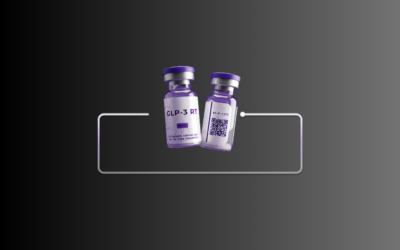
A number of suppliers allow you to search for and view certificates by batch number on their websites in an online COA database. For some of their items, you may find QR codes directly on the products themselves which take you straight to the documentation!
You’ll be able to use the QR verification system or the batch number search functionality to ensure you are looking at the certificate which matches your material.
Final Thoughts: Making COA Verification a Standard Practice
More than a piece of paper stuck onto your product: a Certificate of Analysis is an account of analysis. Researchers need to know the best places to look to reach informed conclusions.
Make sure to check batch numbers, look over assay method, take a glance at lab data and what exactly those results mean! A few minutes reading the COA can bring huge reassurance!